
Gray County Court Records After Arrest
Gray County District Court is the local court for criminal cases that arise after many Gray County arrests. The court is part of the Sixteenth Judicial District, the same district group that includes Ford, Meade, Clark, Comanche, and Kiowa counties. The official Gray County court page lists District Chief Judge Laura H. Lewis, District Judge Andrew Stein, District Judge Sidney R. Thomas, District Magistrate Judge Anthony Bayer, and Clerk of the District Court Angela Bowlin. The court clerk is the main public contact when an online case entry is missing, restricted, or unclear.
A jail arrest record is not the same thing as a filed court record. Gray County Sheriff CRIMEWATCH notices and Ford County Jail custody records can show the arrest basis, the booking path, transport to Ford County Jail, and sometimes a charge headline. Court records after a jail arrest are different. They show the case number, charges filed by the prosecutor, court dates, bond orders, amended or dismissed counts, disposition, and sentence. Custody status belongs with Gray County jail inmate records, while booking photos belong with Gray County jail mugshots.
The official Gray County District Court page is the local source for court contact information, judicial district membership, and clerk access. Use it when the state case portal does not answer whether charges have been filed after a Gray County arrest.
Find Gray County Arrest Court Records
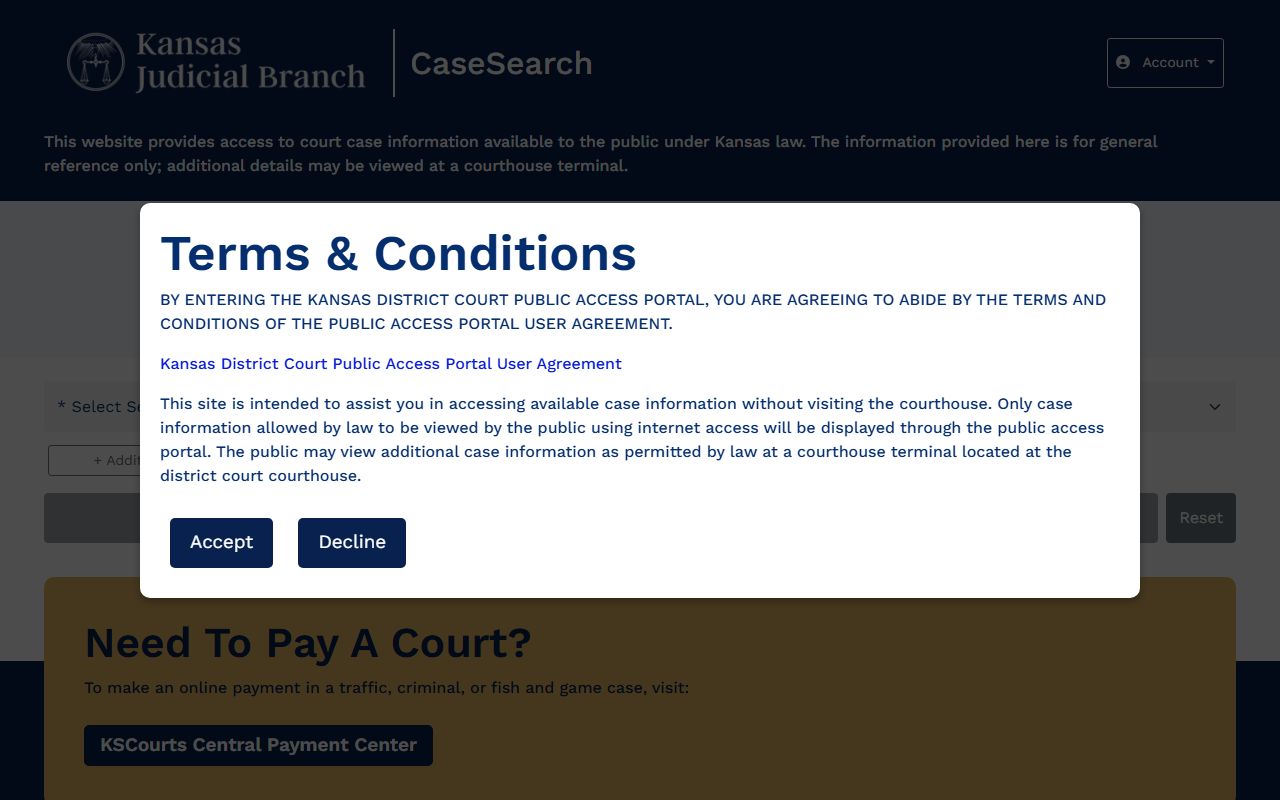
The online starting point is the Kansas District Court Public Access Portal. Kansas court pages describe the portal as public access to district court case information available under Kansas law. Access may require registration or login, and the inspected research environment could not fetch the portal directly because it returned a 403 response. Treat that as an access limit, not proof that a Gray County case does not exist.
- Collect the full name, arrest date, arrest location, and charge wording from the sheriff notice, jail log, or bond paperwork.
- Search the Kansas court portal by party name first, then by case number if a booking sheet, bond paper, or clerk notice gives one.
- Open the criminal case entry and compare the court charges with the arrest or jail charge headline.
- Read each charge status, hearing date, bond order, warrant entry, and disposition line before drawing a conclusion.
The portal is useful for a single court case, but it is not a full criminal-history report. KASPER itself points users to the Kansas.gov criminal history record search for broader criminal history. That statewide history route is separate from a Gray County court case and separate from the Ford County Jail population log.
| Search Field | Use | Access Notes |
|---|---|---|
| Party Name | Search by defendant name when no case number is known. | Name spelling, aliases, and middle initials can affect results. |
| Case Number | Search a known court case directly. | Often found on notices, bond papers, or clerk correspondence. |
| Account Login | Needed for many online portal functions. | Public access may require registration before searches work. |
The Kansas Judicial Branch district court records page explains statewide district court record access. Gray County case questions that remain unresolved online should go to the Gray County District Court Clerk at the courthouse in Cimarron.
The Kansas case-search landing page is the statewide portal named in the research for court records after a jail arrest: Kansas District Court Public Access Portal.
Gray County Prosecutor Charge Records
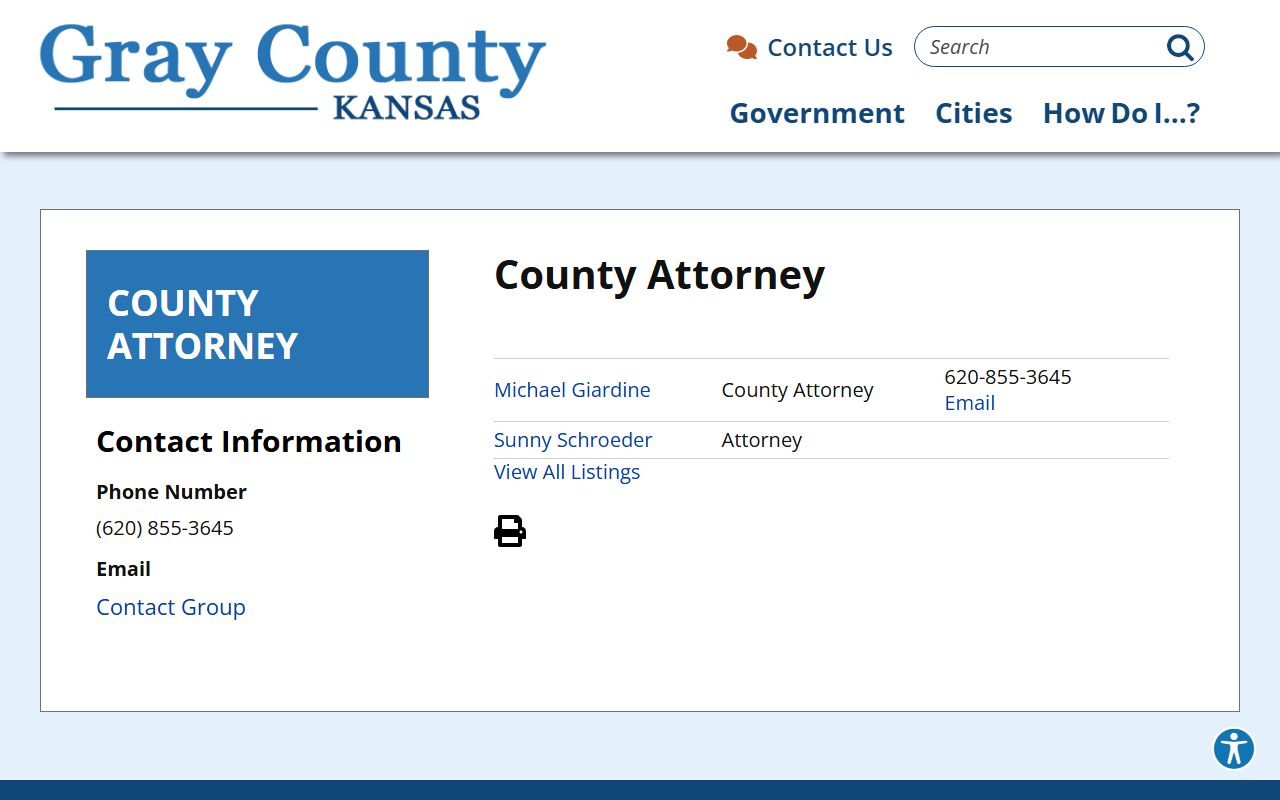
The Gray County Attorney page identifies Michael Giardine as County Attorney, with Sunny Schroeder also listed as attorney. The County Attorney is the local charging office for many criminal cases that come from Gray County arrests. A sheriff or deputy may arrest a person, and the jail may book that person, but the prosecutor decides what formal counts are filed in district court.
That distinction matters. A CRIMEWATCH arrest notice may use a short charge headline. The Ford County Jail custody record may reflect booking charges or hold information. The court file should show the formal charge text, statute reference when available, case number, bond setting, first appearance activity, and later amendments. A charge can be filed, reduced, dismissed, or resolved by plea or trial. It is still only a charge until there is a conviction or other final disposition.
The Gray County Attorney source connects the arrest-to-court path to the local charging office: Gray County Attorney.
Gray County Arrest Charging Documents
After a Gray County jail arrest, the court case usually begins with a charging document. The research does not provide Gray County sample filings, so the safest public-record framing is functional rather than speculative. A complaint, information, or indictment is the document that moves an accusation into the court file. The case can then show appearances, bond orders, amended charges, dismissed counts, and final disposition.
| Document | What It Does | What to Check |
|---|---|---|
| Complaint | Starts a criminal accusation in court, often based on law-enforcement facts and prosecutor review. | Charge wording, statute, date filed, and first appearance setting. |
| Information | States prosecutor-filed charges after review and can replace or refine earlier charge wording. | Whether the court charge differs from the booking charge. |
| Indictment | Reflects grand-jury charging action in cases where that process is used. | Counts, defendants, and later amendments or dismissals. |
A filed count is not proof of guilt. In Kansas court records, the charge list is a live case record that can change as evidence is reviewed, plea terms are reached, hearings occur, or a judge rules on a motion. For Gray County arrests, this is why the court case should be checked after the jail record is found.
Gray County Charge Status Records
Charge status tells where a court count stands. Pending means the count is still active. Amended means the filed charge text, statute, severity level, or factual allegation changed. Reduced means a less serious charge replaced a more serious one. Dismissed means the count was removed by court or prosecutor action. Disposition is the final result, such as conviction, dismissal, acquittal, or another court outcome.
| Status | Meaning in Court Records | Why It Matters After Arrest |
|---|---|---|
| Pending | The charge is still open and not yet finally resolved. | Bond, hearings, and warrant status may still change. |
| Amended | The charge was changed after the first filing. | The booking charge may no longer match the court charge. |
| Reduced | A lesser charge replaced the original count. | Sentencing range and case risk may change. |
| Dismissed | The charge was removed from the case. | A dismissal is not the same as automatic record removal. |
| Convicted | The person was found guilty or entered a guilty plea. | The result may later appear in criminal-history and sentencing records. |
Gray County Bond Court Records
Bond often bridges the jail record and the court record. Ford County's bonds page is important because it is titled for the Sixteenth Judicial District and lists approved bond people serving Ford, Gray, Meade, Comanche, Kiowa, and Clark counties. That district grouping matches Gray County District Court. A person arrested in Gray County may be cited and released, processed locally, transported to Ford County Jail, or held under a no-bond order or another agency hold.
The official bond path starts with custody confirmation. Call Ford County Jail when the person is believed to be held there, and call Gray County Sheriff when the arrest is very recent or the notice says local processing occurred. A bond amount can change at first appearance. A person may also be held by a bench warrant, a probation or parole matter, a federal detainer, an ICE detainer, or another county warrant even when a local bond appears available.
| Bond Term | Plain Meaning |
|---|---|
| Cash Bond | Money posted directly to secure release under court terms. |
| Surety Bond | A commercial bondsperson guarantees the bond if the person fails to appear. |
| Personal Recognizance | Release based on a promise to appear, with conditions set by the court. |
| No-Bond Hold | Release is blocked unless the court later changes the order. |
Note: Bond information is time sensitive because jail status, court orders, and outside holds can change the same day.
Gray County Arrest Warrant Records
Gray County Sheriff uses an official CRIMEWATCH portal with a warrants section. The inspected listing did not show a rich public warrant search form or a full active-warrant field inventory, so it should be treated as a notice channel rather than a complete warrant database. The same portal has Most Wanted, Cases, incidents, forms, tips, and the CRIMEWATCH Mobile app channel.
Warrant type affects the next step. An arrest warrant authorizes arrest. A bench warrant is usually issued by a judge after failure to appear or failure to follow a court order. A search warrant authorizes the search of a place or item and may not create a public wanted entry for a person. A fugitive warrant means another jurisdiction has a custody interest. For a Gray County bench warrant tied to a district court case, contact Gray County District Court or check the Kansas case portal for public case events.
Gray County Records Comparisons
Two comparisons prevent common mistakes after a Gray County jail arrest. First, a charge is an accusation, while a conviction is a court result. Second, sealed and expunged records are not the same thing, and the research file does not identify a Gray County-specific removal shortcut. Kansas public access is governed by the Kansas Open Records Act and court rules, with exceptions for records not required to be disclosed.
| Question | Charge | Conviction |
|---|---|---|
| What is it? | A filed accusation in court. | A guilty plea, verdict, or other judgment of guilt. |
| When does it appear? | After prosecutor filing or court entry. | After final court action on the count. |
| Can it change? | Yes, it may be amended, reduced, or dismissed. | It changes only through later court action, appeal, or record relief. |
| Question | Sealed | Expunged |
|---|---|---|
| Public view | Hidden from ordinary public access when a court order applies. | Treated as removed from ordinary public access after eligible court relief. |
| Agency access | Some agencies may still have limited lawful access. | Some agencies may still see limited records where Kansas law allows. |
| How it happens | Usually by court order, not by asking a website to delete a page. | Usually by statutory eligibility and court order. |
Gray County Court Access Limits
Kansas public records are generally open unless a statute or recognized exception applies. The Kansas Open Records Act begins at K.S.A. 45-215, and K.S.A. 45-221 contains important exceptions. That means some law-enforcement or court-adjacent records can be withheld, redacted, or restricted. Juvenile matters, sealed cases, sensitive personal information, and criminal investigation files may have limits even when related arrest facts are public.
Kansas law note: KORA supports public inspection of government records, but it also preserves exceptions. A Gray County arrest does not make every report, image, witness statement, or investigative file public.
For a court file, start with the Kansas case portal and Gray County District Court. For jail custody, use Ford County Jail and the sheriff channels. For statewide criminal history, use the Kansas.gov criminal-history search. Each source answers a different question, so a missing item in one system may simply mean the record belongs in another system.